Das folgende Video von Metallica hat über 45 Mio Aufrufe. Da es unwahrscheinlich ist, dass ein Benutzer allein es so oft gesehen hat, folgt daraus, dass viele, viele Leute es gesehen haben.
Metallica 2016. Hardwired … aus dem Album Hardwired … to self-destruct.
Das ist der Text:
In the name of desperation In the name of wretched pain In the name of all creation Gone insane We’re so fucked Shit outta luck Hardwired to self-destruct GO! On the way to paranoia On the crooked borderline On the way to great destroyer Doom design We’re so fucked Shit outta luck Hardwired to self-destruct OH! Once upon a planet burning Once upon a flame Once upon a fear returning All in vain Do you feel that hope is fading? Do you comprehend? Do you feel it terminating? In the end We’re so fucked Shit outta luck Hardwired to self-destruct Hardwired to self-destruct Self-destruct Self-destruct Self-destruct
Metallica, Hardwired, 2016
Ich frage mich, was die Zuschauer gedacht haben, als sie das Video gesehen haben. Na, das kann man in den Youtube-Kommentaren lesen. Es geht darum, ob das echter Trash Metal ist oder nicht und ob sie es live schneller spielen.
Metallica: Lars Ulrich (Schlagzeug) und James Hetfield (Gesang, Gitarre) live im Olympiastadion, Berlin, 06.07.19
Das Interessante an diesem Text ist, dass er wahr ist: Erstens sind wir gefickt und zweitens ist die Tatsache, dass wir alles ignoriert haben, bis es fast zu spät ist, in unserem Genom fest verdrahtet. Die Psychologists For Future und die Neurowissenschaftler erklären uns das: Der Neurobiologe Dr. Sébastien Bohler erklärt in seinem Artikel Bewusster leben, dass unser Gehirn so aufgebaut ist, dass wir früher einen Auslesevorteil hatten und all die Jahrtausende überleben konnten. Wir erhalten kleine Belohnungen (Dopamin-Kicks) für Essen, Fortpflanzung, Machtgewinn, geringe Energieaufwendung und sammeln so viele Informationen über unsere Umwelt wie möglich. (Essen, Sex, Faulheit, Rock’n’Roll. Na ja, Rock’n’Roll kommt in dem Artikel nicht vor.)
Das war eine großartige Hardware, um tausende und aber tausende von Jahren am Leben zu bleiben, leider ist nun diese Hardware gerade für unser Versagen verantwortlich. Dem Artikel zufolge sterben mehr Menschen an Überernährung als an Unterernährung. In der Vergangenheit war es kein Vorteil, Lebensmittel für später zu sparen. Vielleicht könnte es jemand anderes nehmen. Also haben wir es lieber sofort gegessen. Unser Gehirn ist nicht so konstruiert, dass wir uns um die Zukunft sorgen und dementsprechend handeln. Es gibt einfach mehr Kicks für das schnelle kleine Glück.
Nun gibt es interessante Ergebnisse von Neurologen: Sie haben Experimente gemacht, bei denen sie den Probanden Geld gaben und sie baten, es mit einer anderen, unbekannten Person im nächsten Raum zu teilen oder das Geld zu behalten. Das Interessante ist, dass Frauen anders als Männer handelten: Die Frauen teilten das Geld häufiger und diejenigen, die es teilten, bekamen Dopamin-Belohnungen im Gehirn. Männer bekamen die Belohnungen für das Behalten des Geldes. Die Hypothese ist, dass Frauen dieses Verhalten in ihrer frühen Kindheit gelernt haben, während Männer dazu erzogen wurden, aggressiv und wettbewerbsfähig zu sein.
Die gute Nachricht ist: Vielleicht ist ja nicht alles in unseren Köpfen fest verdrahtet und ein Teil davon ist auf Erziehung zurückzuführen. Wie bekommen wir unsere Kicks? Beim Behalten oder beim Teilen? Können wir unsere Gewohnheiten ablegen/ändern? Ja, sagt Dr. Bohler. Menschen, die zu viel essen, können ihre Essgewohnheiten ändern, indem sie sich mehr Zeit nehmen und bewusster essen. Dasselbe gilt für andere Lebensbereiche. Brauchen wir dieses neue Auto? Wozu? Zum Vorzeigen? Wir können unsere Gewohnheiten ablegen, bewusster sein und uns unserer Zukunft stellen. Denkt darüber nach und handelt entsprechend.
Sobald wir bereit sind, uns der Klimakrise zu stellen, stellt sich die Frage: Was können wir tun? Wo ist der Ausweg? Derzeit ist das Wichtigste, das, was wir alle tun können, mit unseren Politikern zu sprechen und sie wissen zu lassen, dass die Dinge, die sie tun, nicht ausreichen und dass sie ihre verdammten Arsch bewegen müssen, aus der Kohle aussteigen, in erneuerbare Energien investieren, die Subventionierung von Flugreisen einstellen und so weiter. Wir sollten FridaysForFuture unterstützen und an ihrer globalen Klimaaktion am Freitag 20.09.2019 teilnehmen! Schaut Euch die Orte, wo sie aktiv sind, an und wenn nichts in Eurer Nähe passiert, macht selber was. Wir sehen uns am Freitag!
PS: Noch ein Song-Text:
I don’t wanna be rejected I don’t wanna be denied And it’s not my misfortune That I’ve opened up your eyes
Freedom is given, speak how you feel I have no freedom, how do you feel? They can lie to my face but not to my heart If we stand together it will just be the start
If the kids are united! They will never be divided!
Tja, die Kids von heute kennen diesen Song wahrscheinlich nicht, aber lasst uns ihnen trotzdem helfen. =:-)
The following video by Metallica has over 45 Mio views. Since it is unlikely that one user watched it that often, it follows that many, many people saw it.
Metallica 2016. Hardwired from the album Hardwired … to self-destruct.
These are the lyrics:
In the name of desperation In the name of wretched pain In the name of all creation Gone insane
We’re so fucked Shit outta luck Hardwired to self-destruct
GO!
On the way to paranoia On the crooked borderline On the way to great destroyer Doom design
We’re so fucked Shit outta luck Hardwired to self-destruct
OH!
Once upon a planet burning Once upon a flame Once upon a fear returning All in vain Do you feel that hope is fading? Do you comprehend? Do you feel it terminating? In the end
We’re so fucked Shit outta luck Hardwired to self-destruct Hardwired to self-destruct Self-destruct Self-destruct Self-destruct
Metallica, Hardwired, 2016
I wonder what the viewers thought while watching the video. Well, one can read about this in the youtube comments. They are about wether this is real Trash Metal or not and whether they play it faster live.
Metallica: Lars Ulrich (drums) and James Hetfield (vocals, guitar) performing live at Olympia Stadium, Berlin, 06.07.19
The interesting thing about these lyrics is that they are true: First, we are fucked and second the fact that we ignored everything till it is almost too late is hardwired in our genome. The psychologists four future and the neuro scientists explain this to us. The neuro biologist Dr. Sébastien Bohler explains in his article Bewusster leben that our brains are structured in a way that helped us survive for a very long time. We get little rewards (dopamin kicks) for eating, reproducing, gaining power, using as little as possible energy and collect as much information about our environment as possible. (eating, sex, laziness, Rock’n’Roll. Well, he did not mention Rock’n’Roll)
Now, while this was a great hardware for staying alive for thousands and thousands of years, this hardware is now responsible for our failure. According to the article there are more people dying from overnutrition than from undernutrition. In the past it was not an advantage to save food for later. Maybe somebody else could take it. So we rather ate it immediately. Our brains are not constructed to worry about the future and to act accordingly.
Now, there are interesting results from neurologists: They did experiments in which they gave money to subjects and asked them to share it with another, unknown person in the next room or to keep it. The interesting thing is that women acted differently from men: The shared the money more often and those who did got dopamin rewards in their brains. Men got the rewards for keeping the money. The hypothesis is that women learned this behavior during their early childhood while men are trained to be aggressive and competitive.
The good news about this finding is: Maybe after all not everything is hardwired in our brains and part of it is due to training and education. How do we get our kicks? For keeping stuff or for sharing? Can we unlearn our habits? Yes, says Dr. Bohler. People who eat too much can change their eating habits by taking more time and eating more consciously. The same applies to other areas of live. Do we need this new car? What for? For showing off? We can unlearn our habits, be more conscious and face our future. Think about it and act accordingly.
Once we are ready to face the climate crisis, the question is what can we do? What is the way out? Currently the one most important thing we all can do is to talk to our politicians and let them know that the things they do are not enough and that they have to move their fucking asses, get out of coal, invest in renewables, stop subsidizing air travel and so on. We should support FridaysForFuture and join them in their global ClimateAction on Friday 20.09.2019! Check out the places where they are active and if nothing happens near you, start your own. See you on Friday.
PS: Some more song:
I don’t wanna be rejected I don’t wanna be denied And it’s not my misfortune That I’ve opened up your eyes
Freedom is given, speak how you feel I have no freedom, how do you feel? They can lie to my face but not to my heart If we stand together it will just be the start
If the kids are united! They will never be divided!
Well, kids of today probably do not know this song, but lets join them anyway. =:-)
A good friend of mine told me about a birthday. A women’s round in Prenzlauer Berg in August. Everyone reported about their holidays and everyone, all but my friend flew. I asked her if she had said anything. The answer was, “No, they would never invite me again.”
The comic artist Ralf Ruthe reports on Twitter about similar situations:
On Sunday I was in a park with the twins and our new AuPair Laura. When it started to rain, we “saved” ourselves on a beer bench under a large gastro umbrella, along with approx. 10 other people. It was raining for quite a while and somehow it was quite cozy with this small, randomly thrown group of people. A small cross-section of society, a friendly, protected mini-world. They smiled and mumbled their quickly bought fries.
He describes a scene in which he wanted to tell a Colombian woman whether it is raining often in Germany for such a long time. He talked about climate change and all the conversations around him came to a standstill. Silence, isolation, ignorance. A second scene he describes is a meal with many people, one of whom went into the climate discussion with racist arguments. Again: silence.
These two experiences were like a slap in the neck for me. I am shocked at how little the climate crisis seems to be being communicated outside the front pages of magazines and news pages. I am horrified when I imagine that there is no talk about it at kitchen tables, in company canteens and in office coffee kitchens, because people may be afraid that it will break the cosy atmosphere – although that is exactly what is absolutely necessary.
I have had similar experiences in a discussion about a class trip, where one option was an air trip to Naples and a train trip to the Baltic Sea. Declared goal of the students: Hang out on the beach. Most parents in the class did not understand the problem of air travel or did not take it serious (the plane will go anyway). Only one mother indirectly supported me in the discussion at the parents’ evening. The discussion then continued by email and took on epic proportions. It culminated in an email in which a father said that it wouldn’t be so bad if a few million people bit the dust, there would be too many anyway.
Yes, FridaysForFuture is destroying this nice world where no one is getting too close to the other. Young people question our everyday lives. Suddenly, as an adult, you have to ask yourself whether it’s ok to go on holiday by plane every year. Or for a weekend in Paris/London/Tallin. Or even more crazy: from Berlin to Frankfurt or Stuttgart. And yes, we need to talk about it. We have to get out of the filter bubble. If it happens more often, it also becomes more normal, the group of those who know increases and the risk of social ostracism decreases.
Eine gute Bekannte von mir berichtete geknickt von einem Geburtstag. Eine Frauenrunde im Prenzlauer Berg im August. Alle berichteten von ihren Urlauben und alle, alle bis auf meine Bekannte sind in den Urlaub geflogen. Ich habe sie gefragt, ob sie etwas gesagt hat. Die Antwort war: „Nein, die würden mich doch nie wieder einladen.“
Der Comic-Zeichner Ralf Ruthe berichtet auf Twitter über ähnliche Situationen:
Am Sonntag war ich mit den Zwillingen und unserem neuen AuPair Laura in einem Park. Als es anfing zu regnen, “retteten” wir uns auf eine Bierbank unter einen großen Gastro-Sonnenschirm, zusammen mit ca. 10 anderen Personen. Es regnete eine ganze Weile lang und irgendwie war es ziemlich gemütlich mit dieser kleinen, zufällig zusammengewürfelten Gruppe Menschen. Ein kleiner Querschnitt durch die Gesellschaft, eine freundliche, geschützte Mini-Welt. Man lächelte sich zu und mümmelte seine schnell noch gekauften Pommes.
Er beschreibt eine Szene, in der er einer Kolumbianerin Auskunft darüber geben wollte, ob es hier immer so lange regnet. Er sprach über Klimawandel und alle Gespräche um ihn herum kamen zum Erliegen. Betretenes Schweigen, Isolation, Ignorieren. Eine zweite Szene, die er beschreibt, ist ein Essen mit vielen Personen, unter denen eine mit rassistischen Argumenten in die Klimadiskussion ging. Genauso wieder in der Runde: Schweigen.
Diese zwei Erlebnisse waren für mich wie ein Schlag in den Nacken. Ich bin schockiert darüber, wie wenig die Klimakrise anscheinend außerhalb der Titelseiten von Zeitschriften und Nachrichtenseiten kommuniziert wird. Ich bin entsetzt, wenn ich mir vorstelle, dass an Küchentischen, in Firmenkantinen und in Bürokaffeeküchen nicht darüber geredet wird, weil die Leute vielleicht Angst haben, dass es die gemütliche Stimmung kaputt macht – obwohl genau das zwingend nötig wäre.
Ich habe ähnliche Erfahrungen bei einer Diskussion um eine Klassenfahrt gemacht, bei der eine Option eine Flugreise nach Neapel und eine eine Zugreise an die Ostsee war. Erklärtes Ziel der SchülerInnen: Gepflegt am Strand abhängen. Die meisten Eltern in der Klasse haben das Problem mit der Flugreise nicht verstanden bzw. nicht als ernstes Problem wahrgenommen. Nur eine Mutter hat mich indirekt in der Diskussion auf dem Elternabend unterstützt. Die Diskussion ging dann per Email weiter und nahm epische Ausmaße an. Highlights:
Wenn es in Zinnowitz kalt wird, müssen die heizen und das verbraucht CO2. (im Juni!)
Wenn die SchülerInnen in Neapel sind können sie dort Früchte essen, die dort wachsen, in Zinnowitz sind die schlecht wegen CO2.
Die Diskussion gipfelte dann in einer Email, in der ein Vater meinte, dass es doch nicht so schlimm wäre, wenn ein paar Millionen Menschen hopps gingen, es wären ja eh zu viele.
Ja, FridaysForFuture macht diese heile Welt, in der niemand dem anderen zu nahe tritt, kaputt. Die Jugendlichen hinterfragen unseren Alltag. Plötzlich muss man sich als Erwachsener die Frage gefallen lassen, ob es ok ist, jedes Jahr in den Urlaub zu fliegen. Oder mal für ein Wochenende nach Paris/London/Tallin. Oder noch irrer: von Berlin nach Frankfurt oder Stuttgart. Und ja: Wir müssen uns darüber unterhalten. Wir müssen raus aus der Filterblase. Wenn es öfter vorkommt, wird es auch normaler, die Gruppe derjenigen, die Bescheid wissen, wird größer und die Gefahr der sozialen Ächtung kleiner.
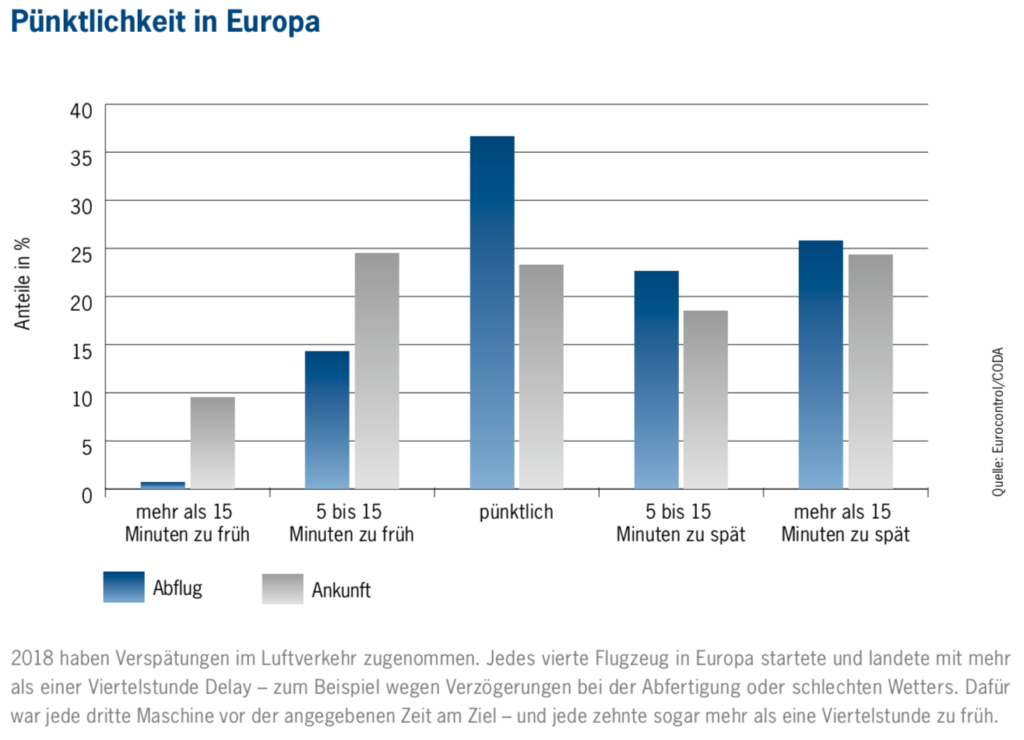
Wenn es um Flug oder Bahn geht, bekomme ich immer wieder die Antwort, dass doch die Bahn so unzuverlässig sei. Mit Interesse habe ich daher den Bericht der Deutschen Flugsicherung für 2018 gelesen. Darin findet man folgende Grafik:
Pünktlichkeit von Flügen nach DFS. Jedes vierte Flugzeug in Europa zu spät. DFS Mobilitätsbericht 2018, S. 28
Laut DFS ist in Europa jedes vierte Flugzeug mehr als eine Viertelstunde zu spät. Die Pünktlichkeitsrate liegt also in Europa bei nur 75 %!
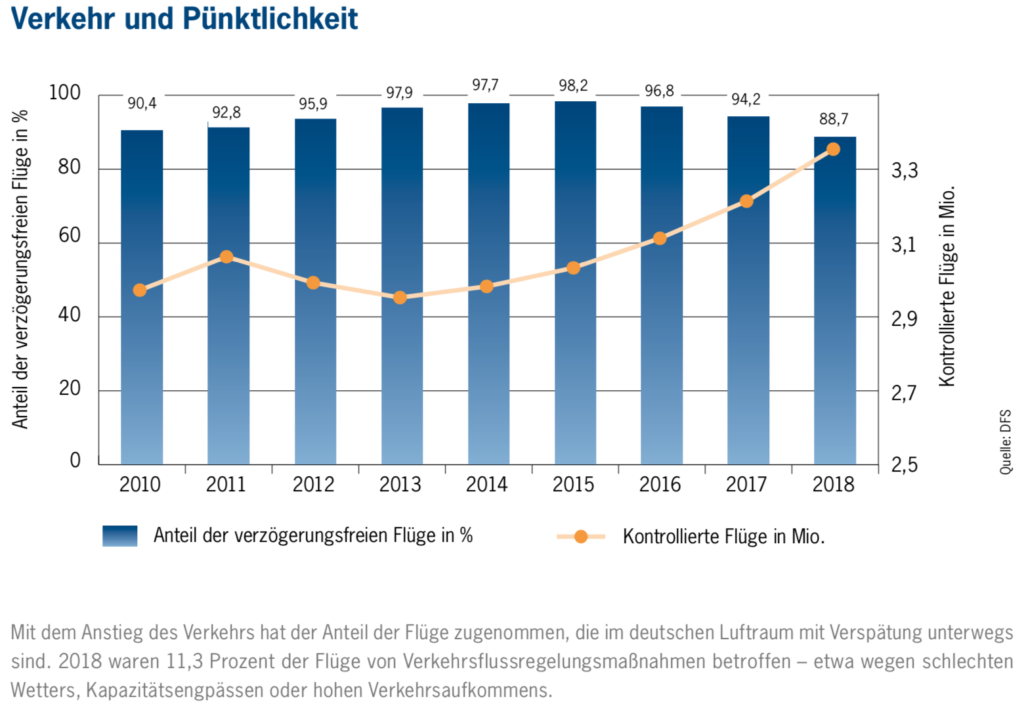
Für Deutschland sieht das besser aus. Die Pünktlichkeitsrate liegt bei 88,7 %. Allerdings zeigt die Grafik der DFS, dass es einen Zusammenhang zwischen Zunahme der Flugverbindungen und Verspätungen gibt:
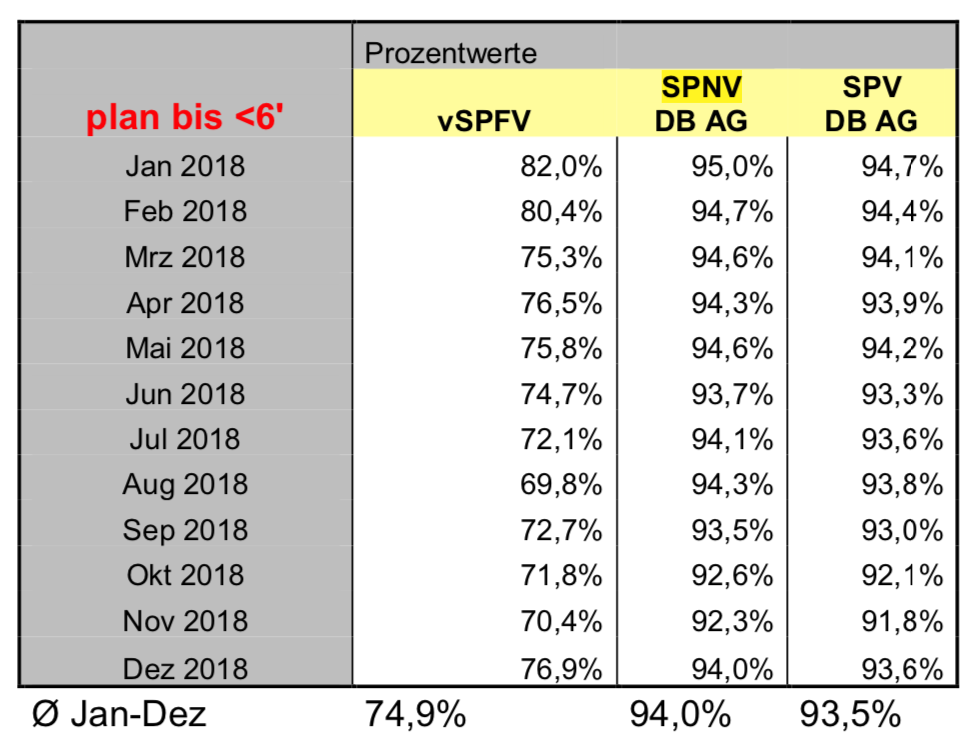
Vergleicht man das mit der Bahn, so sieht man, dass die Pünktlichkeit im Personenfernverkehr bei 75% liegt. Im Nahverkehr bei 94% und gesamt bei 93,5%.
Pünklichkeitsbericht der Bahn 2018
OK. Da ist Luft nach oben! Aber ich erinnere mich an die Zeit vor 1998. Da hatte die Bahn an den Bahnhöfen Kreidetafeln mit Pünktlichkeitswerten und die waren auch bei 95%. Danach ist bei der Bahn viel falsch gelaufen (ich sag nur Mehdorn). Redundanzen wurden abgebaut. Lokführer-Pools reduziert/abgeschafft. Werkstätten geschlossen. Alles mit Hinblick auf den Börsengang. Wenn man der Bahn in Zukunft die Rolle in unserem Verkehrssystem zubilligt, die ihr zusteht, dann wird das auch wieder besser. Und es schafft Arbeitsplätze!
Extinction Rebellion gets increasing coverage in the German press (e.g. in the Spiegel/19.08.2019 and in the ZEIT/37/2019). I looked around for more information and foud this interview with Roger Hallam, co-founder of Extinction Rebellion in BBC’s HardTalk. I also read Hallam’s manifesto. Here are my thoughts.
The video
First let’s have a look at the HardTalk video:
Roger Hallam, co-founder of Extinction Rebellion in BBC’s HardTalk
There were several things about this program that I found interesting:
Stephen Sackur’s repeated questions on how Hallam wants to motivate people to join his movment
Do you want to motivate people with negative messages? Where is the fun about all this?
Stephen Sackur repeatedly asks Roger Hallam how he wants to activate the masses if all the messages he has are negative (e.g. here, here and here). I found this quite strange. Stephen Sackur seems to still have this idea that all we do has to be related to and motivated by fun. This is the stereotype we older people have of the younger ones: they party all weekend, taking drugs and having fun. The youth is not interested and apolitical. But this changed in the past year. The effects of the climate crisis are visible and perceptible. Germany had 42,6° this year. The glaciers are melting (Okjökull in Iceland, the glaciers of the Himalaya). Kids are getting increasingly worried, frightened and frustrated by the incompetence and slowness of the adults. And as John Lydon (aka Jonny Rotten) put it: Anger is an energy. The kids and the adults do not need a fun part in the motivation of a movement although it helps if there is a fun part to the actions. As Hallam put it: it is the science that matters: if a doctor says that the patient has cancer and that it is terminal, it would be inappropriate to spread hope and optimism. But see further below for hope and optimism. And maybe even a bit of fun.
Climate neutral till 2025?
As for the goal of being climate neutral in 2025, I think this is unrealistic. Unfortunately. There is an engineer living in my house who plans power plants based on solar power. So he is probably the strongest advocate of renewable energies one can think of since it is his business that would profit a lot from a complete switch to renewables. He says that it would be possible to replace all fossil fuel needed for heating, traffic and general electricity replacing coal and atomic power in 10–12 years. Of course the question is how radical changes could be. Reduction in consumption both of goods and energy. But looking at the situation in Germany with a government basically acting against renewable energy and arriving at compromises to stop using coal in 2038 suggests that replacing fossil energy by renewables in 10–12 years would be a great goal to achieve. This would be 2029–2031.
6 billion dead in 50/60/70 years?
I am a Scientist 4 Future, that is, I am one of the 26.800 German speaking scientists who signed in support of the Fridays4Future movement. I asked my colleagues about the 6 billion people since I never heard this in the media before. The answer is: It could happen but there are so many unknown factors that it would be dubious to publish respective simulations. Hallam considers a scenario of 5° of global heating, which everybody agrees, we definitely have to avoid. With 5° of global heating it could be 0 or 2 Billion people left. Too much is unknown. However, it is clear that everything above 3° will be catastrophic and this is where we are currently heading at:
While we do not find any statements about possible 5° scenarios in the literature, we do find 2° scenarios and they are alarming enough: according to Shindell et. al. it is 110–196 Mio people dying early if we go on to 2°:
We therefore examine the human health benefits of increasing 21st-century CO2 reductions by 180 GtC, an amount that would shift a ‘standard’ 2 °C scenario to 1.5 °C or could achieve 2 °C without negative emissions. The decreased air pollution leads to 153 ± 43 million fewer premature deaths worldwide, with ~40% occurring during the next 40 years, and minimal climate disbenefits. More than a million premature deaths would be prevented in many metropolitan areas in Asia and Africa, and >200,000 in individual urban areas on every inhabited continent except Australia.
A more recent report by the World Resources Institute found that 2 billion people are affected be severe droughts (faz, 06.08.2019). The ICIMOD project did research on the Himalaya glaciers and the effect their melting has on water and food supply for people living at the rivers fed by the glaciers. 1,9 Billion people are affected.
So there is a big problem, no doubt about this.
Using drones to block Heathrow?
The next topic I want to comment about is the drones: the idea to block Heathrow by using drones frightened me. In general it is a bad idea to interfere with air traffic. The number of attacks on pilots with laser pointers is increasing and attacking a plane is a very dangerous thing to do. I live near the airport Tegel which is located in the middle of Berlin. Air planes out of control are not just dangerous for those who are in the airplane but also for those who are below it.
I checked the schedules of Heathrow and there seems to be a break during the night from 23:30–6:00. So there is a period in which no planes are starting and landing. In addition, flightradar can be used to check whether non-scheduled planes (government or transportation flights or delayed flights) are approaching. So the drones could be started in time when no plane is in the air. If the airport is informed about the drones, no planes will be permitted to start or land and hence there would be no danger for passengers, crew and people on the ground. Just a silent and peaceful airport. So, this would be a non-violent action. But to be absolutely clear: Sackur asks about flying drones into a busy airport. And Hallam does not take this up. Such actions would involve a high risk of killing many people. Anyway, even for non-risky drone scenarios, drone attacks are probably a bad idea since people who steer the drones are locatable within seconds, their are means to destroy the electronic parts of the drone to bring it down. This article about anti-drone measurements is from 2016 and I guess much progress was made on this issue since then. There is an industry working on drone protections for us (demonstrations, football events, open air concerts, whatever). By the way: there is a much less risky way to keep planes down. Just block the roads leading to the airports. Berlin taxi drivers blocked Tegel airport this year. Of course with Extinction Rebellion, it would not be cars but people instead.1 So, I guess the statement regarding drones was not serious, but it has an effect: it gets us talking.2
Deaths in relation to Extinction Rebellion and grannies being dragged away by police
There was the statement that people will die in relation to Extinction Rebellion and that we will see grannies being dragged off by the police. Well, no dead people and dragged away grannies so far but severely injured over 70 year olds in civil disobedience actions: people entered RWE’s open mine to save a forest. I cannot find the video of the old guy anymore (it was on twitter, maybe deleted), but there are other videos showing police violence and a man protesting against a project of building the Stuttgart train station lost one eye due to a water gun (the responsible policemen were found guilty by a German court). This is what Hallam talks about. There is a risk and it depends on the movement and on the contact to the police, how future events will develop.
I am not part of Extinction Rebellion, but I take part in pickets organized by climatewednesday.org. Two months ago, we were just finished with one of our events when a police car arrived. I thought: “Oh, no! We are in trouble. We did not register the event with the police!” But they came to tell us that there is another group of climate protesters in front of the Potsdam Landtag (were the government of the federal state Brandenburg works) and that it is small and needs support. So, the police helped us! Thanks for this!
Joint protest by researchers and other protesters after the police made us aware of the fact that there was a small group needing support. 2019-06-12
(From that day on, all our actions were registered with the police or university administration.)
A colleague told me today that the policemen who is responsible for them likes what they do and already checked whether there is something in the net about #CopsForFuture.
So these are two instances of climate-friendly policemen (two men and one woman) and there are probably many more. Of course, we do not violate any laws, so Extinction Rebellion may be a different story as far as police experiences are concerned.
Extinction Rebellion and civil disobedience is only possible in democratic systems, or is it?
Stephen Sackur claims that Extinction Rebellion takes the easy way since it works in Britain, which is a democracy and that “in many parts of the world there is no possibility of Extinction Rebellion”. This claim is a little bit underwhelming for a political journalist dealing with mass movements. I give you some examples: 30 years ago there were big protests on the Tiananmen Square. It was protests against an authoritarian regime and they ended with a massacre. At this time I served in the East German army. Shortly after the massacre the East German TV broadcasted an official propaganda movie of the Chinese government. Everybody in the army had to watch it. We collectively went to the TV room, sat down for 45 minutes and watched this movie. It was clear to all of us what this meant. We were in the army. Outside the barracks people started to protest. At March 7th the government frauded the elections. People supported by the church organized the countings of the votes documenting the manipulations through the government. Since then there were demonstrations every 7th of the month. The army decided to show the movie to us to prepare us for our role to defend the system. I was lucky enough to reach the end of my army time exactly 30 years ago on August 25th. But many of my friends had to stay on. Equipped with riot helmets and truncheons they were sent to Dresden. They waited outside the city for orders to come. Fortunately, nothing happened. My friends could go back to the barracks without having to face their protesting family members. You also may read about this time in the novel Der Turm. I was in Berlin back then. Protesters did pickets, people did a hunger strike in the Gethsemane Church. On October 7th I saw riot police in Berlin. The first time I saw these helmets. The first time I saw Räumfahrzeuge. I was shocked. The next days escalated: we were in the church for a big political meeting and when we left it, there was police everywhere. The land of the church was special: the police had no right to enter and somehow they respected this rule. So one was safe on church ground, but how to get out? How to get home? We were standing there and we were shouting: “Keine Gewalt! Keine Gewalt!” (no violence) The pastor negotiated with the police and we could leave. On the streets (Schönhauser Allee) there were groups of people discussing political topics. If a circle got too big, Stasi members came and disturbed these discussions. They came in platoons. One could tell who belonged to these groups since they wore similar clothing (stone washed jeans). I was careful to avoid them but we know that they arrested many in this night. They kept them, stripped them down naked, and beat them. In the following days, the demonstrations got bigger and bigger and we knew that non-violence was our only chance. We knew that they would have killed us otherwise. They showed us the movie. In the end, we won. The result is not what many (most) of us dreamed of but Honecker/Mielke/Krenz are history.
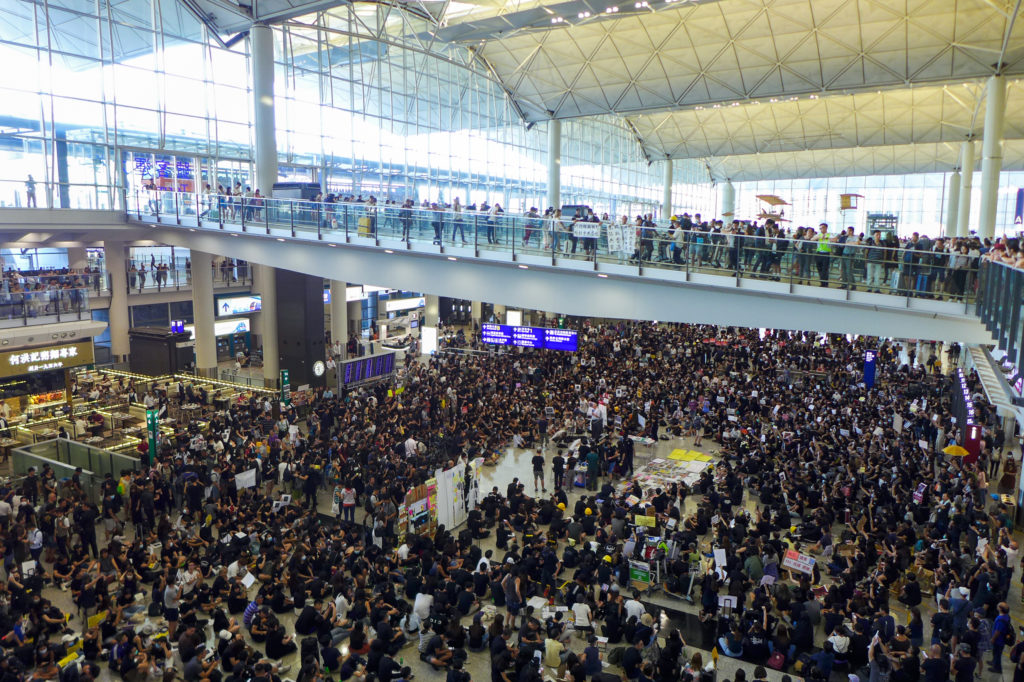
Another example of a protest movement in a non-democratic system is taking place right now. It is related to Tiananmen. People in Hong Kong are protesting and demanding democracy. China is gathering troops at the border to Hong Kong. So they are in a similar situation. Do they protest? Yes, they do. And ironically, they also shut down the airport.
Hong Kong Airport blocked 26.07.2019 CC-BY-SA:Wpcpey
And now reconsider Extinction Rebellion. Democracy is nice to have and we fought for it and the Hong Kong people fight for it. But we are talking about food and water. For billions of people. As Roger Hallam said: there will be migration, wars, and masses of dead people. And there will be riots. Not because of Extinction Rebellion, which is and hopefully stays non-violent, but because of desperate people without any perspective.
Negative feelings and emotions within recent movements
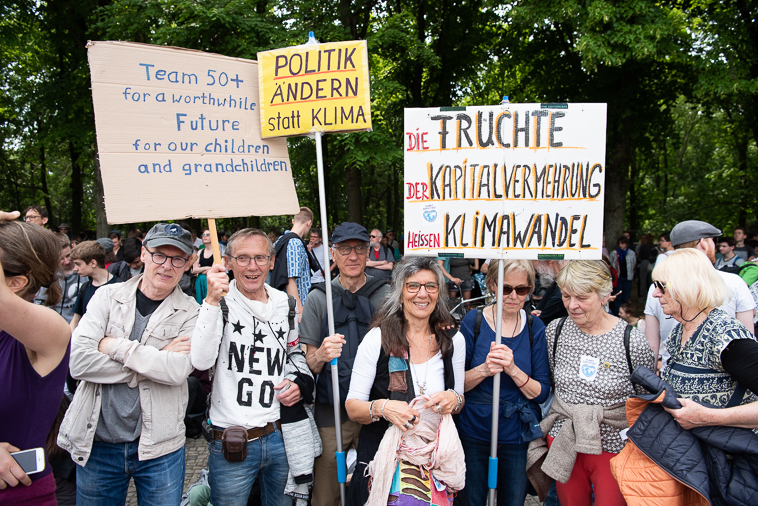
I am not a part of Extinction Rebellion and I am too old to consider myself part of FridaysForFuture but I take part in FridaysForFuture events (see pictures) and I noticed that these movements are different from what I knew before: they have an awareness team, they care for each other in a different way. They talk about feelings and help each other. The Spiegel article was about this. People help each other dealing with the crisis since once you realized which situation we are in you get into emotional trouble (despair, fear, hopelessness, see above, and read the article about depressions in Greenland). So according to the Spiegel Extinction Rebellion Germany has something to offer. People get out of their paralysis and start to live again, they start to act. I am not into this talking and touching stuff described in the Spiegel. In fact it would be a reason for me not to go to these meetings, but I can confirm that it is important for everybody among the scientists being active in climatewednesday.org to talk to like-minded people. No fun, but good feelings.
Team 50+ at FridaysForFuture, Berlin 24.05.2019: Nobody is too old to join FridaysForFuture
Academia, Rebellion and Fridays for Future
Hallam describes his argument with King’s College in London. He managed to get them to disinvest into coal by civil disobedience:
Two years ago, myself and a group of students, painted messages on the walls of King’s College London where I do my PhD research. Our aim was to persuade the College to divest from all fossil fuels, something they had refused despite four years of conventional campaigning. Petitions, meetings and sitting on committees had gone nowhere. When we painted the walls of the great hall of the College, we won in five weeks. Direct action worked. I was immediately suspended and banned from entering the college. However, I openly challenged the ban to the point of getting carried out of the Students Union by security staff and after ten days they removed the ban. The embarrassment was too great. Instead I was invited into negotiations with the vice principal and I then told him I was going on hunger strike until they had a signed statement committing the university to total divestment by a set date.
The situation is quite different in Germany. First the universities do not invest into stock. They do not have any money at all (exaggerating a bit). Apart from this the universities in Berlin and Brandenburg were really open towards the scientist who did pickets in support for FridaysForFuture. In the case of the Humboldt University they allowed us to use a booth on the premises of the university.
The TU, Uni Potsdam, and HU announced our initiative to collect self-commitments for not flying short distances via their central mailing lists. The president of the TU gave various press releases regarding FridaysForFuture and took part in demonstrations. The HU published an interview with me in their university journal. So, big institutions are on the side of FFF. It must be said though that the original initiative for sustainability in University of Potsdam and Humboldt University came from students. It was a student who organized solar power for the university and it were students at the HU who founded the Nachhaltigkeitsbüro (office for sustainability). It is the success of FFF and movements like Extinction Rebellion that climate issues now arrived at the highest level of university administration.
Hallam describes the law suit following his actions in which he was found to be not guilty since there was a higher reason for his illegal actions.
A year and half later the crown prosecution service decided to prosecute me and another student for ‘criminal damage without lawful excuse’ – for painting the walls. We appeared in front of a jury and represented ourselves. We were told by the judge that the trial has nothing to do with climate change. I was interrupted 15 times and told to stop talking about it (something I kept ‘forgetting’ to do). For the judge it was a clear and simple case. We put paint on the wall, it is against the law and thus we are guilty. However, we argued what is obvious – our case was about climate change. It was about preventing the terrible suffering that will be created by the criminal fossil fuel industry unless there is wholesale divestment and it is closed down. We had a right of necessity to cause disruption in order to prevent massive disruption. This is a no brainer. The judge couldn’t get his head around it but the jury, ordinary Londoners, certainly did. They considered the case for the minimum time necessary. All of them then came to the unanimous verdict, we were not guilty on all charges of criminal damage. The judge told us ‘you are free to go’.
The same is true for German pupils on school strike. They are violating the rules but the opinion of law experts is that this is perfectly legal since it is the right and the duty of the kids to school strike (Dr. Reinald Eichholz, assesment by Prof. Dr. Dr. Felix Ekardt). ScientistsForFuture fully supports FridaysForFuture. Although the kids practice civil obedience. So what about Extinction Rebellion? Many German scientists are state employees. They swore an oath. What would happen if they blocked roads or airports? Would it be their right? Their moral obligation? Do we support others blocking roads? Airports? We support the kids, who are threatened with punishments in some federal states,3 aren’t we?
Is there hope? A vision?
Yes, there is. We should switch to 100% renewables as quickly as possible, we should scale down our consumption of everything and we – the Western world – have to adjust our goals for economic growth. It may be that this is not possible with the political parties we currently have although the protests seem to have some effect. Angela Merkel agreed to a 55% CO2 reduction target for 2030 for the EU, something she rejected for a long time now. Reducing the EU CO2 output by 55% entails a reduction of 68%–73% for Germany. If this goal is reached by increasing the price of CO2 certificates this would mean the end of coal in Germany in 2030 (The current plan is 2038). The question is, whether the current government is capable of reaching these goals. Germany is a car country. Political parties are lobbied and heavily influenced by car manufacturers. The same is true for coal. It is not just the CDU, there are also SPD members being payed by the coal industry. So what can we do? FridaysForFuture is getting stronger, adults are supporting the movement. There will be a huge strike on 20.09. followed by a week of climate actions and Extinction Rebellion will kick in in October. How do we make sure that the climate movement would be successful? Well, I first thought about round tables like in 1989. Representatives of the people’s movement were talking to the government and tried to find some consensus. The results of these talks and the reunion process afterwards were wanting in many respects as it turned out in retorspect. East Germans just did not have a clou about West German law and all the things to take care of. For example, Tegel airport has special noise protection zones in West Berlin. No such zone exists for East Berlin. It was simply forgotten in the reunion contract. But the situation now is different. We have the experts who know what has to be done and what should be done. Nevertheless there is a problem: who is supposed to make decisions? When will we – the climate movement – be satisfied? What is a consensus? I thought a lot about this and I guess Hallam is right in his manifesto. He suggests citizens’ assemblies: people selected by chance, a representative sample of the population. It is probably right that this is the only way in which explosive topics can be handled and in which we could find a consensus as a society. Hallam gives several examples, one was the discussion of abortion in Ireland. This is a topic no political party could deal with without getting into trouble. So, 99 people were selected, they discussed the issue, listened to experts and finally decided to support a referendum, which finally took place (article in the Guardian). You may also watch the following video:
Video about the Citicens’ Assambly in Ireland dealing with abortion
The lecturer in public policy at Edinburgh University stated the following regarding such assemblies:
“It’s quite a milestone in the field of democratic innovations. This is the first time this has been part of everyday politics,” he says. Elements of representative, deliberative and direct democracy came together via parliament, the citizens’ assembly and referendum. “When these things are combined, you have a democratic system that’s more powerful.”
Oliver Escobar, a lecturer in public policy at Edinburgh University in The Guardian, 2018
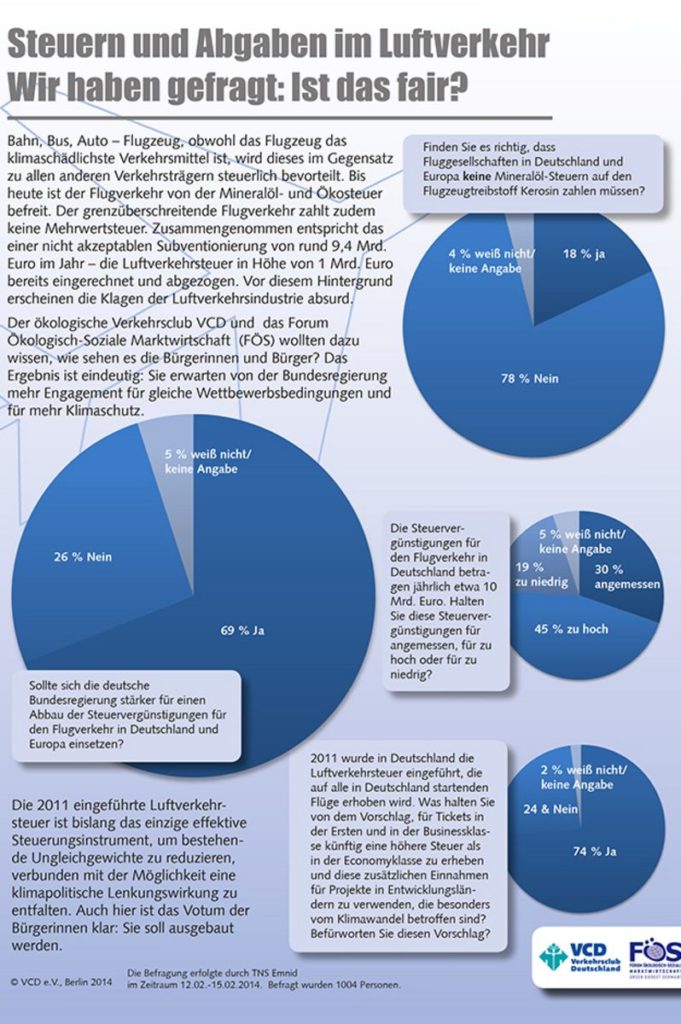
Would it work? I think it would work. Once the climate movement is so strong that a government agrees that a citizen assembly is a good way to solve the problem, people will be sufficiently aware of the catastrophe we are in. To give two example: the majority of the Germans (63 % (Welt) or 57 % (Bild/Targobank)) is for a speed limit, while the government is refusing to introduce it (#ApprovedByGermanAutobahn). The second example is taxes on kerosene. According to a survey of the Verkehrsclub Deutschland in 2014 (executed by TNS Emnid among 1004 people), 78% think it is wrong that aviation industry does not pay taxes on fuel and 69% agreed that the German government should reduce tax privileges of the aviation industry.
Survey by TNS Emnid in 2014 for VCD among 1004 Germans. Most are in favor of reducing priveliges of the aviation industry.
So may be the average person from the street can solve the problems a government cannot solve. But again it is not as easy as the abortion case in Ireland. What is needed is a huge transformation of our societies. It will not be done with some weeks of meetings in a hotel. How will the assembly be organized? Are people willing to serve on it? What if not? How long will it take? How is lobbying controlled? If this assembly works for a long time, how do we prevent lobbying? How do we do this on an international level? And quickly? It is not easy, but I do not see any other way.
Conclusion
Everybody has to act now to convince the general public that there is a problem that needs to be solved quickly and to convince governements to act. A citizens’ assembly seems to be the most resonable way to prepare decisions. All protest has to be non-violent. Let’s hope it works. Let’s work.
Appendix: Is there a fun part in climate Armageddon?
Well, may be there is a tiny little bit of fun. You may check out the following two videos by the German Comedy Metal band Knorkator. I guess one needs to understand German and maybe a very specific sense of humor is required as well. Have fun!
Knorkator (2006): Wir werden alle sterben! (We will all die!)
Wir werden alle sterben. Haltet euch bereit!
Die Zeichen sind eindeutig, bald ist es soweit.
Vielleicht schon heute Abend, vielleicht in einem Jahr
Doch alle werden sterben, traurig aber wahr!
Wir werden alle sterben. Haltet euch bereit!
Die Zeichen sind eindeutig, bald ist es soweit.
Da gibt es kein Entrinnen, da kommt nichts mehr ins Lot,
die Party ist zu Ende, bald sind alle tot.
Wir werden alle sterben. Haltet euch bereit!
Die Zeichen sind eindeutig, bald ist es soweit.
vielleicht beim Zähneputzen, vielleicht beim Abendbrot,
doch irgendwann passiert es, dann sind alle tot.
Wir werden alle sterben. Haltet euch bereit!
Die Zeichen sind eindeutig, bald ist es soweit.
Die Türen sind verschlossen, die Ampel steht auf Rot,
der Zug ist abgefahren, bald sind alle tot.
Knorkator, 2019: Rette sich, wer kann (Save yourself if you can!)
Die Welt ist am Ende
kurz vor dem Kollaps
Alle wissen Bescheid
nützt aber ncihts.
Wir machen immer weiter
willenlose Dandies
Therapie is nicht.
Der Arzt isn Dealer.
Wir liegen da und fressen.
Werden immer fetter.
Der Fernseher läuft.
Alles ist gut.
Alle sitzen im Bus.
Autobahn, Vollgas.
Da vorn isn Abgrund!
Aber is ja noch n Stück.
Wir könnten auch abbiegen.
Tut er aber nicht.
Da is ja nur ein Sandweg.
Schlecht für die Achsen.
Bloß nicht anhalten!
Leben heißt, Gas geben.
Kopf aus dem Fenster!
Hoch die Tassen!
Seit über einem Jahr gehen die Kinder und Jugendlichen nun für unsere Zukunft auf die Straße. Sie haben viel erreicht: Das Thema ist auf der Tagesordnung, die Kanzlerin, die irgendwie in den Ruf gekommen war, eine Klimakanzlerin zu sein, hat jetzt eingesehen, dass die Zeit für Pillepalle vorbei ist und sogar in der EU noch ambitionierteren Zielen bei der CO2-Einsparung zugestimmt. 68–73% Reduktion bis 2030 für Deutschland. Nur wie der Weg dorthin aussehen soll, ist völlig unklar. Zumindest der Regierung. Die Verkehrswende wird erfolgreich blockiert, die Agrarwende genauso. Kohleausstieg: Ja, gerne. Später dann. (Mit den jetzt angenommenen Reduktionszielen müsste 2030 Schluss sein) Statt einer schnell wirksamen CO2-Steuer wird auf Emissionshandel gesetzt.
Im deutschsprachigen Raum haben sich 26.800 WissenschaftlerInnen hinter FridaysForFuture gestellt. Wir (ScientistsForFuture, S4F) unterstützen ihre Ziele und die KlimawissenschaftlerInnen unter uns haben die Richtigkeit ihrer Behauptungen bzgl. Klima bestätigt. S4F sieht sich selbst nicht als NGO oder Aktivisten in der Klimabewegung sondern eher als Faktenchecker, die FFF oder andere KlimaaktivistInnen mit ihrer Expertise unterstützen. Das ist einigen WissenschaftlerInnen nicht genug: Sie haben sich als climatewednesday.org zusammengetan, um FFF auch durch Mahnwachen und aktive Umorganisation der Gesellschaft und dabei insbesondere des akademischen Bereichs zu unterstützen. Zur Zeit gibt es jeden Mittwoch Aktionen in Adlershof, an der HU (Hauptgebäude), der TU, der FU, in Potsdam und in Leipzig. Ziel hier ist die Mobilisierung für die Aktionswoche von FFF im September und insbesondere für die große Demo am 20.09. Die Aktionen von climatewednesday.org dauern immer eine Stunde und jede und jeder kann dort seine Mittagspause verbringen.
Die Aktiven von climatewednesday.org haben eine Liste von Vorschlägen ausgearbeitet, die sie den jeweiligen Universitätsleitungen unterbreiten werden. Hauptziel ist die Klimaneutralität der Universitäten bis 2035. Eine Studie der ETH Zürich hat festgestellt, dass 50% ihres CO2-Ausstoßes durch Reisetätigkeit verursacht wird. Davon sind 93% Flügen zuzuordnen. Höchstwahrscheinlich wird das für die deutschen Universitäten genauso sein. Prof. Dr. Dr. Martina Schäfer von der TU Berlin hat überlegt, wie man den CO2-Ausstoß pro Jahr um 10% reduzieren könnte und dabei bietet sich eine Reduktion der Flüge an. Es ist klar, dass die Nachfrage nach Flügen auch mit deren Preis zu tun hat und dass das Hauptziel daher sein muss, die Subventionen des Flugverkehrs abzuschaffen und Steuern zu erhöhen. Das ist ein politisches Ziel, für das wir uns gemeinsam mit FFF einsetzen. Aber wir können als AkademikerInnen auch selbst zur Verringerung des CO2-Ausstoßes beitragen, indem wir unser Handeln hinterfragen, unseren Konferenzbetrieb anders organisieren und Flüge einfach vermeiden. Prof. Schäfer hat deshalb eine Selbstverpflichtungsaktion zum Verzicht auf dienstliche Kurzstreckenflüge gestartet, die inzwischen auch an der Uni Potsdam, der HU Berlin, der Uni Leipzig und der Beuth-Hochschule angelaufen ist. Bisher haben schon fast 1.000 Menschen unterschrieben. Das Ziel sind bis zur Übergabe an FFF am 20.09. 2000 Unterschriften. Die Seiten der Selbstverpflichtungsaktionen an den jeweiligen Hochschulen sind auf einer gemeinsamen Seite von climatewednesday.org verlinkt.
Am 20.09. haben FridaysForFuture zur weltweiten Protestaktion #AlleFürsKlima aufgerufen. Es ist wichtig, ein Zeichen zu setzen und die Forderungen von FridaysForFuture an die Politik zu unterstützen. Es wird einen ScientistsForFuture-Block geben und ich möchte alle aufrufen, an dieser Demonstration teilzunehmen, auch wenn es nur kurz in der Mittagspause ist. Verdi, die GEW und der DGB rufen ihre Mitglieder auf, an der Protestaktion (in der Pause/im Urlaub) teilzunehmen und auch der Papst findet, dass wir etwas tun sollten. Jede/jeder Einzelne. (May God, “the lover of life” (Wis 11:26), grant us the courage to do good without waiting for someone else to begin, or until it is too late.)
Für BerlinerInnen: Die Demo findet ab 12:00 am Brandenburger Tor statt. Das ist die perfekte Zeit für die Mittagspause.
This is one of many tips on how to reduce your carbon footprint.
Do you have this pile of paper that is in the mailbox every day? This free weekly newspaper with no content but ads, advertising from the post office (extra welded in plastic packaging), catalogues, magazines? A sticker on the letterbox helps against these free weekly newspapers, against advertising from the post office and similar stuff. You ordered somthing online and since then you get a catalogue once a year? Twice a year? More often? It is best to unsubscribe immediately when a catalogue is in the mail. the customer number is usually at the back. A mail to shipper and you’re out. Help other family members: Can I unsubscribe from this catalogue for you?
This magazine: Do you still read it? I unsubscribed the computer magazine last week because I only read the FAQ and tips and tricks regularly and otherwise individual articles. I have an online subscription for that, that’s enough.
Professional stuff: Do you need that? Yes, this university lecturer’s newspaper. There’s something interesting in there from time to time, but somehow you can’t get to read it and it’s just lying around. Cancelled. Annual reports and invitations from institutions with which you have had something to do at some point? The DFG’s research magazine (by Wiley =:-(). Cancelled.
Magazines and brochures: unsubscribed
Schwuppdiewupp a whole bunch of paper and the shipping saved. Actually simple, but you have to stick to it. You can do this. =:-)
And one more tip at the end: If you don’t want unsolicited advertising, you can sign up for the Robinson list. These are available for Germany and some other countries. You can also block your phone number there. Then there is scilence. Like on an island.
Das ist einer von vielen Tipps, wie Ihr Euren CO2-Fußabdruck verkleinern könnt.
Gibt es bei Euch auch diesen Haufen Papier, der jeden Tag im Briefkasten ist? Wochenzeitung, Werbung von der Post (extra eingeschweißt in Plaste-Verpackung), Kataloge, Zeitschriften? Gegen Wochenzeitungen hilft ein Aufkleber am Briefkasten. Gegen Werbung von der Post und sonst wem auch. Irgendwann mal irgendwo etwas bestellt und seitdem einmal im Jahr den Katalog? Zwei Mal im Jahr? Noch öfter? Am besten immer sofort, wenn ein Katalog kommt, diesen abbestellen. Hinten ist die Kundennummer drauf. Mail an Versender und Ihr seid raus. Helft den anderen Familienmitgliedern: Darf ich für Dich diesen Katalog abbestellen?
Diese Zeitschrift: Lest Ihr sie überhaupt noch? Ich habe letzte Woche die c’t abbestellt, weil ich eigentlich nur die FAQ und Tipps und Tricks regelmäßig lese und ansonsten einzelne Artikel. Dafür habe ich ein online-Abo, das reicht völlig.
Berufliches Zeug: Braucht Ihr das? Ja, diese Hochschullehrerzeitung. Da steht ab und zu etwas Interessantes drin, aber irgendwie kommt man doch nicht zum Lesen und sie liegt nur rum. Abbestellt. Jahresberichte und Einladungen von Institutionen, mit denen Ihr irgendwann mal etwas zu tun hattet? Das Forschungsmagazin der DFG (auch noch von Wiley). Abbestellt.
Zeitschriften und Broschüren: abbestellt
Schwuppdiewupp einen ganzen Haufen Papier und den Versand eingespart. Eigentlich einfach, aber man muss dranbleiben. Schafft Ihr. =:-)
Und noch ein Tipp zum Schluss: Wenn Ihr keine unverlangte Werbung haben wollt, könnt Ihr Euch bei der Robinson-Liste eintragen. Die gibt es für Deutschland und einige andere Länder. Da kann man auch seine Telefonnummer hinterlegen. Dann ist Ruhe. Wie auf einer Insel.
This is one of many tips on how to reduce your carbon footprint.
Today I discovered an interesting way to reduce your CO2 emissions. Unfortunately, the target group of this post is relatively small. But I don’t want to leave anything untouched. Compared to the decommissioning of your tumble dryer, this tip would have much more impact. So, when you fly, just fly with a scheduled plane, not your private plane. This would save a lot of CO2.
Seriously, according to an estimate in an essay in Nature Climate Change, which is also available on Researchgate, the 0.54% of the richest people have a CO2 emissions of 3.9 billion tons of CO2/year. This corresponds to 13.6% of all lifestyle-dependent CO2 emissions. By contrast, the 50% poorest people have 10% of emissions. The authors of the study interviewed three super-rich families, each with more than a million dollars in share ownership. In addition, real estate and valuables. Two families from the US and one from South Korea. On top of this, a pilot from Central Europe who flies customers on private planes was interviewed.
CO2 emissions from the super-rich. Three families were examined in one study. Otto et.al. 2019. Shift the focus from the super-poor to the super-rich. Nature Climate Change 9. p. 83.
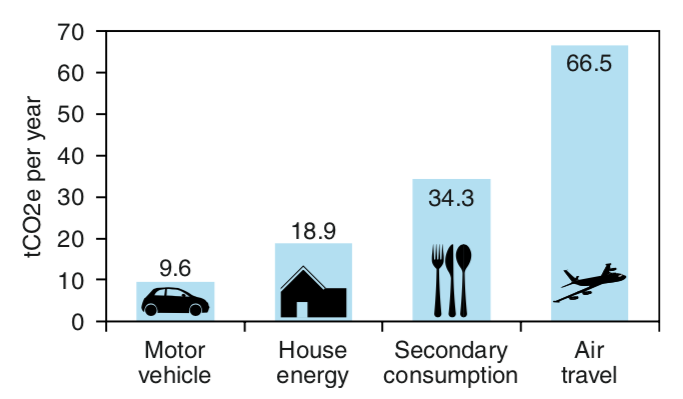
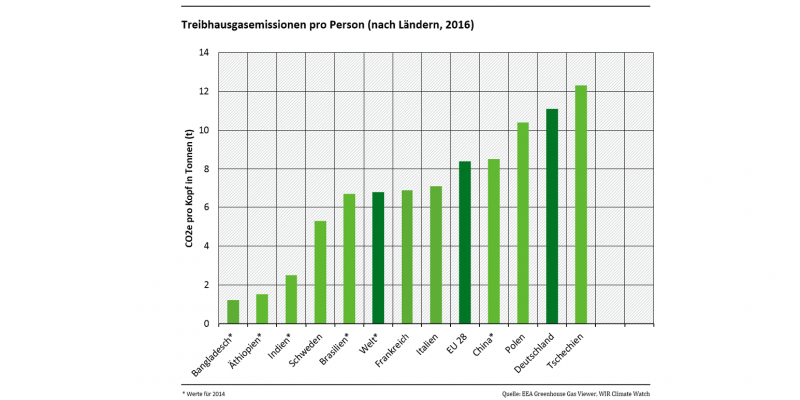
The total emissions amounted to 129.3 tons of CO2 per year (for a two person household). This is 65 tons of CO2 per year per capita. For comparison: US average 22 tons, German average 11.61 tons.
Frequent air travel is a primary contributor to hugely above-average emissions of the super-rich that could be substantially reduced by avoiding using private jets and just flying less.
Otto et.al. 2019. Shift the focus from the super-poor to the super-rich. Nature Climate Change 9. p. 83.
So, in case somebody belonging to the 0.54% should read my blog: Here is my request: Fly with a normal scheduled plane. You can get to know nice people in business clas as well and on an economy flight you certainly get completely new perspectives on life in general and humanity in particular. Train travel is, of course, even more exciting!
If you really belong to the 0.54%, you will not like another suggestion of the authors. They propose levying inheritance tax and diverting revenue to climate funds. But perhaps this proposal will be forgotten again if you do it like Bill and Melinda Gates, like the Otto Group or Bosch and support ecological projects yourself. And the article also mentions that the posh and rich act as a role model for us ordinary folks. Just put cool solar cells on the roof of your house (it is big enough).
See you! On the train.
Addendum after sleeping about it: The authors of the study say that CO2 taxes would not stop the super-rich from flying. “Heavy environmental taxation, as commonly discussed, is unlikely to effect the consumption behaviour of the super-rich, who can afford to continue polluting.” (p. 83) One could, however, link taxes to aircraft utilisation. If an aircraft flies with three people instead of 500, other taxes are due. Similar models exist for the taxation of cars, where size also plays a role. Of course, the regulations have to be developed with a sense of proportion, because even scheduled flights sometimes fly back empty.